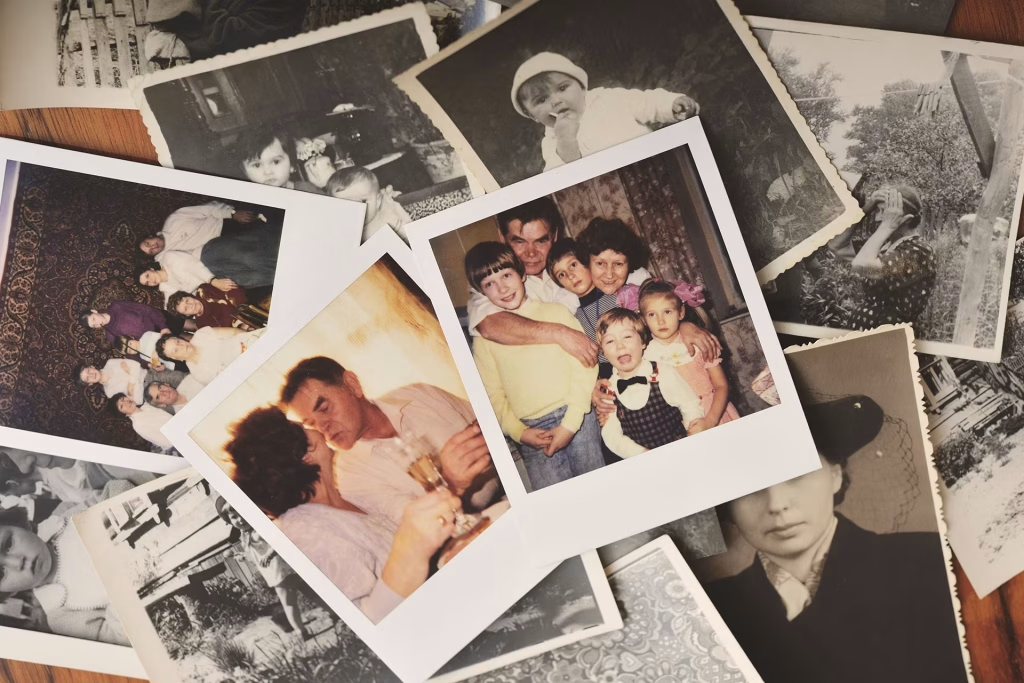
Family memories are more than keepsakes—they are emotional records of who we are, where we come from, and how our lives connect across generations. Photographs, stories, videos, and personal reflections form a bridge between the past, present, and future. Yet many families don’t realise how fragile these memories are until they begin to fade, degrade, or disappear altogether.
Future-proofing family memories means intentionally preserving them so they remain accessible, meaningful, and intact for decades to come. With technology constantly changing and physical materials naturally ageing, safeguarding memories for the next 50 years requires a thoughtful, multi-layered approach. This guide explores how families can preserve their stories in ways that stand the test of time.
Why Family Memories Are at Risk
Before understanding how to preserve memories, it’s important to understand why they’re vulnerable.
Physical items like printed photographs, handwritten letters, and albums can fade, tear, or be lost due to environmental damage, relocation, or simple neglect. Digital memories, while seemingly safer, face their own risks—obsolete file formats, failed hard drives, forgotten passwords, and cloud services that may not exist in the future.
Without planning, even the most cherished family memories can vanish within a generation.
Start With What You Already Have
Future-proofing doesn’t begin with buying new tools—it begins with organising what already exists.
Gather:
-
Printed photographs
-
Old family photo albums
-
Home videos
-
Voice recordings
-
Letters, journals, and documents
-
Existing digital files on phones, laptops, and hard drives
Once collected, take time to identify what matters most. Memories don’t gain value through volume; they gain value through meaning. Prioritise items that tell stories, show relationships, or capture defining moments.
Preserve the Story, Not Just the Image
A photograph without context can lose its meaning over time. One of the most effective ways to future-proof memories is to preserve the story behind them.
Add:
-
Names of people in photos
-
Dates and locations
-
Short explanations of what was happening
-
Emotional significance of the moment
A well-labelled family photo album becomes far more than a collection of images—it becomes a narrative record future generations can understand and connect with.
Similarly, a family memory book that combines images with written reflections provides depth that visuals alone cannot offer.
Balance Physical and Digital Preservation
Relying solely on physical or digital formats creates unnecessary risk. The most resilient approach is a hybrid one.
Physical Preservation
-
Store albums and books in cool, dry environments
-
Avoid direct sunlight and humidity
-
Use archival-quality paper and inks
-
Keep originals away from basements and attics
A carefully curated family photo album or memory book can survive decades when properly stored and maintained.
Digital Preservation
-
Digitise old photographs and documents
-
Convert analogue videos to digital formats
-
Save files in widely supported formats (JPEG, MP4, WAV, PDF/A)
Digital backups protect against physical loss—but only if they are managed properly.
Create Multiple Backups (And Update Them)
One of the biggest mistakes families make is assuming one backup is enough. Technology fails, devices break, and services shut down.
A future-proof system includes:
-
A primary digital archive
-
A local backup (external hard drive)
-
A secondary backup stored off-site or in the cloud
Revisit and update backups every few years to ensure files are still accessible and compatible with current technology.
Use Timeless Formats and Open Standards
Proprietary software and obscure file types can become unreadable over time. To protect memories long-term, use open, widely adopted formats that are likely to be supported decades from now.
For example:
-
Images: JPEG or TIFF
-
Video: MP4
-
Audio: WAV or MP3
-
Documents: PDF/A or plain text
This reduces the risk of memories becoming locked behind obsolete technology.
Capture Voices, Not Just Faces
Future generations may recognise faces, but hearing a voice creates an emotional connection that visuals alone cannot match.
Record:
-
Short interviews with family members
-
Stories about childhood, traditions, and milestones
-
Reflections on life experiences
These recordings can be referenced in a family memory book or paired with photos in digital archives, adding richness and humanity to preserved memories.
Curate, Don’t Just Store
Future-proofing is not about saving everything—it’s about curating intentionally.
Ask:
-
What would someone 50 years from now want to understand about this family?
-
Which moments define our values, culture, and relationships?
-
What stories explain who we were, not just what we looked like?
A curated collection—whether a memory book, album, or digital archive—is far more likely to be revisited than an overwhelming, unorganised folder of files.
Involve Multiple Generations
Memory preservation is strongest when it’s collaborative.
Encourage:
-
Older relatives to share stories and context
-
Parents to document everyday moments
-
Children to express memories in their own words
When multiple generations contribute, memories become more accurate, inclusive, and emotionally layered.
Plan for Future Access
Future-proofing also means ensuring memories can be found and understood years from now.
Consider:
-
Clear naming conventions for files and folders
-
Written guides explaining what collections contain
-
Password management or access instructions
-
Physical notes stored with albums or books
A family memory book with an index, introduction, or timeline can help future readers navigate the content with ease.
Revisit and Refresh Over Time
Memory preservation is not a one-time task—it’s an ongoing process.
Every few years:
-
Review physical albums for wear
-
Refresh digital formats if needed
-
Add new stories and reflections
-
Update backups
This maintenance ensures memories remain intact, relevant, and accessible as time passes.
Why Future-Proofing Memories Truly Matters
In 50 years, today’s everyday moments will become historical records. Future children and grandchildren won’t just want to see faces—they’ll want to understand relationships, personalities, values, and lived experiences.
A thoughtfully preserved family photo album offers visual continuity. A carefully written family memory book provides emotional and narrative depth. Together, they form a legacy that survives changing technology and passing time.
Final Thoughts
Family memories don’t fade because they lack importance—they fade because they aren’t protected. Future-proofing is an act of care, intention, and respect for both past and future generations.
By combining storytelling, organisation, technology awareness, and thoughtful curation, families can ensure their memories remain alive, meaningful, and accessible for the next 50 years and beyond.
The most important step is simply to begin—because memories preserved today become the legacy remembered tomorrow.